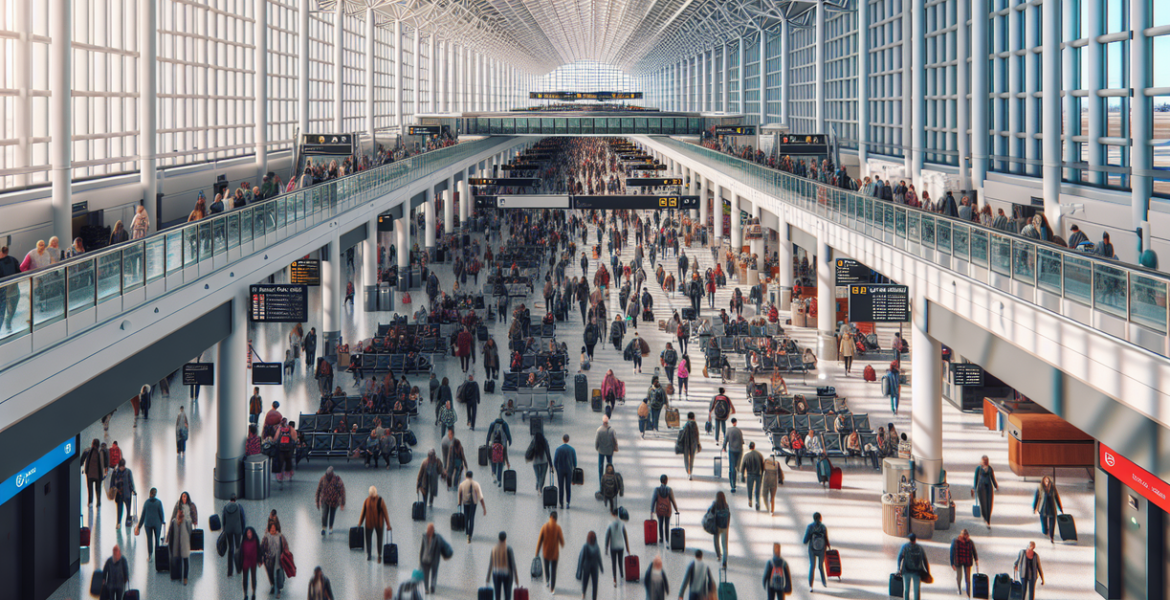
venukb.com – Holiday travel has roared back to life, turning Chicago’s airports and expressways into a living stress test for America’s transportation system. As the season’s first major surge hits, Chicago O’Hare expects hundreds of thousands of passengers to stream through its terminals in a single day, with Midway and the surrounding highways not far behind. For many travelers, this return to pre-pandemic volume feels both exciting and exhausting, as reunions, long-postponed trips, and winter getaways all collide over one packed weekend.
Chicago sits at the crossroads of the nation, so holiday travel pressure here offers an early glimpse of what the entire country faces over the coming weeks. Crowded TSA lines, overstuffed overhead bins, and congested tollways now serve as the backdrop for emotional family greetings and impatient honking. From my perspective, this season is more than a logistics challenge; it is a real-time experiment in how well travelers, airports, airlines, and road crews have learned from the chaos of the past few years.
Chicago’s Front-Row Seat to Holiday Travel Chaos
When holiday travel ramps up, Chicago turns into a barometer for national movement. O’Hare, long known as one of the busiest hubs on Earth, faces surging passenger counts that spill across terminals from dawn to well past midnight. Lines snake toward security checkpoints, food courts run short on seating, and gate agents juggle standby lists like circus performers. Yet, beneath the visible frenzy, an intricate choreography unfolds as ground crews, air traffic control, and airport staff move aircraft, bags, and people through tight windows of time.
My own experience passing through O’Hare during peak holiday travel has been a mix of admiration and anxiety. On one hand, the scale impresses: planes arriving from nearly every corner of the world, people speaking dozens of languages, packed arrival halls where hugs outnumber complaints. On the other hand, one delayed flight or missing crew member can trigger a cascading wave of disruption. Watching the boards flip from “On Time” to “Delayed” offers a blunt reminder of just how fragile efficiency becomes once demand stretches every resource.
The road picture around Chicago mirrors the aviation crunch. Travelers who prefer four wheels over wings crowd I-90, I-94, and the Tri-State Tollway, pushing congestion to the limit during popular departure windows. GPS apps reroute cars through side streets, only to push backups into surrounding neighborhoods. This convergence of airport and highway gridlock reveals a broader truth about holiday travel: the system works reasonably well under average conditions but hits a wall when millions choose the same few days to move. Chicago simply makes that strain impossible to ignore.
Strategies for Surviving Peak Holiday Travel
From a traveler’s point of view, the key to surviving holiday travel lies less in avoiding crowds and more in navigating them intelligently. The first shift involves mindset. Instead of expecting a smooth journey, assume friction. That expectation reduces frustration and encourages proactive planning. Arriving early, building generous layovers, and choosing early morning flights often reduce exposure to cascading delays. While these tactics seem obvious, many travelers still cut arrival times too close or gamble on tight connections, then feel blindsided when storms or staffing shortages disrupt meticulously planned itineraries.
Technology now plays a larger role than ever in holiday travel resilience. Airline apps, real-time security wait trackers, and traffic tools help travelers pivot quickly when problems appear. I have learned to treat my phone as a control tower in miniature. Before leaving for the airport, I check security estimates, gate assignments, weather patterns, and highway speeds. When something shifts, I adjust. Rebooking through an app beats standing in a long customer service line; checking alternate routes before merging onto a jammed expressway can salvage valuable hours. Digital awareness does not eliminate chaos, yet it gives travelers leverage.
Behavior also matters, perhaps more than we care to admit. During holiday travel peaks, patience becomes a rare commodity. One tense interaction at security or a heated exchange at the gate can ripple through a crowded environment already on edge. I see a quiet opportunity here: travelers who approach the ordeal with empathy instead of outrage actually improve their own experience. A kind word to an overworked gate agent, a flexible attitude toward seat assignments, or a willingness to gate-check a bag can make the difference between a miserable story and a tolerable, even meaningful, journey.
What Chicago’s Rush Reveals About How We Move
The current holiday travel surge through Chicago does more than fill planes and clog tollways; it exposes the underlying health of our mobility systems and our collective habits. Packed terminals highlight the need for modernized infrastructure, smarter scheduling, and better staffing models. Crowded highways reveal long-deferred investment in public transit and intercity rail. Yet the human side may be even more revealing. We choose to travel on the same few days, cling to oversized luggage, and expect frictionless experiences from complex networks running near capacity. Reflecting on this season, I see holiday travel less as a hassle to endure and more as a mirror we hold up to ourselves. How we design, fund, and use these systems will shape every future rush, from Chicago to wherever our next journey begins.
You may also like