
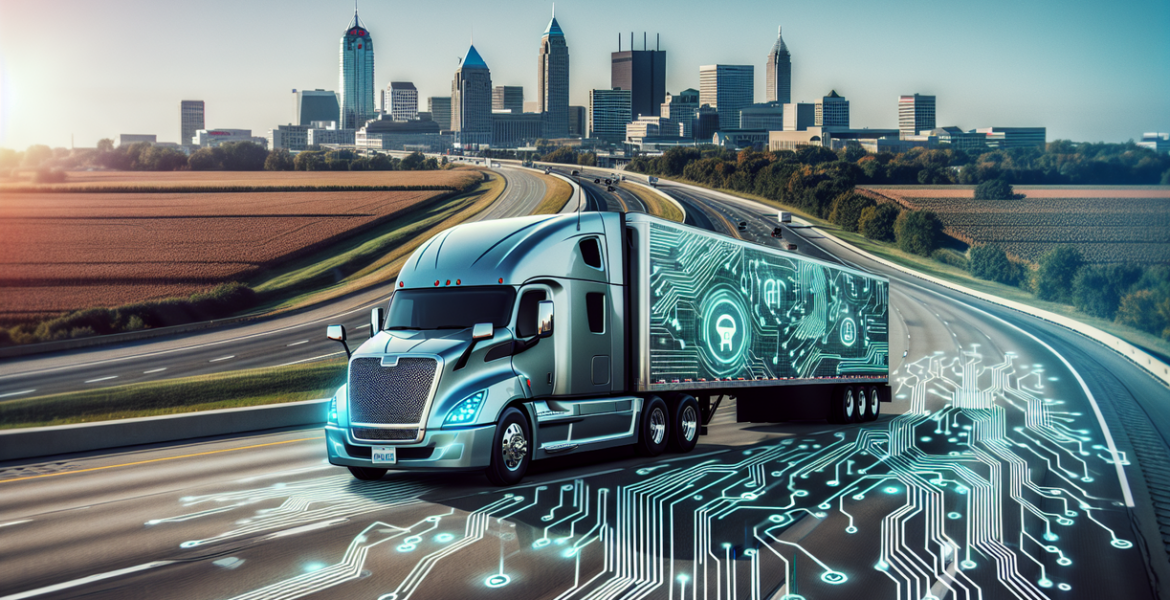
venukb.com – The kodiak driver has left the comfort of the Sun Belt and is now rolling through the Midwest, bringing Level 4 autonomous trucking to the busy I-70 corridor in Ohio and Indiana. This shift marks a crucial moment for self-driving freight, because it moves from predictable warm-weather routes to regions with harsher seasons, heavier cross-country traffic, and more complex conditions. For the trucking industry, these trials hint at a future where algorithms share the highway with human professionals across more of the country, not just in select test markets.
By extending kodiak driver operations into Ohio and Indiana, Kodiak AI is signaling that driverless freight is no longer a distant experiment. It is becoming a practical tool tested on real commercial routes, with state partners closely watching the results. These new runs on I-70 are more than engineering demonstrations. They are early indicators of how regulators, shippers, drivers, and local communities might coexist with automated trucks at scale, especially once the technology moves from pilots into everyday logistics.
Kodiak Driver Leaves the Sun Belt Comfort Zone
For several years, most autonomous trucking pilots stayed close to the Sun Belt. Milder climates reduce weather-related risks, let sensors see clearly, and simplify early testing. Now the kodiak driver is taking on the I-70 stretch across Ohio and Indiana, a major freight artery with a wider range of conditions. This move matters because it shows confidence that the system can handle more than just smooth, sunny highways.
Running Level 4 trials on I-70 means the kodiak driver can operate without human control in defined scenarios, although safety drivers and remote teams still monitor performance. Each mile on this corridor provides data on lane changes, merges, construction zones, and unpredictable traffic. It is a tougher proving ground than many southern routes, which helps engineers refine perception, prediction, and planning in more varied situations.
Ohio and Indiana emerged as logical next steps for several reasons. Both sit at the crossroad of national freight flows, host manufacturing hubs, and support logistics innovation. By collaborating with state partners, the kodiak driver gains access to regulatory guidance, highway patrol feedback, and infrastructure insights. That partnership is not just political theater; it speeds up learning about real-world integration, from rest-stop usage to emergency-response protocols.
What Level 4 Autonomy Really Means on I-70
Level 4 autonomy often sounds abstract, so it helps to ground it in daily trucking life. When the kodiak driver operates in Level 4 mode, the system handles steering, speed, and navigation within a defined operational design domain. On designated stretches of highway, the truck should not need human intervention for normal driving. Still, a trained operator can take over if circumstances push beyond that domain, such as extreme weather or unusual road incidents.
On I-70, this translates into the kodiak driver controlling most of the highway miles between specified entry and exit points. Traditional pain points for long-haul drivers—monotonous night driving, fatigue, micro-distractions—are exactly where autonomy shines. The system does not get tired, does not glance at a phone, and follows speed limits with machine precision. However, autonomy is not magic. It must still interpret unclear lane markings, odd vehicle behavior, and sudden slowdowns.
The real test of Level 4 goes beyond technical checklists. Success means the kodiak driver can coexist with human road users in ways that feel predictable and safe. That includes giving courteous space to merging vehicles, reacting cautiously near emergency scenes, and handling heavy truck traffic near logistics hubs. Every trip on I-70 creates a feedback loop, highlighting edge cases where software needs refinement or infrastructure could use clearer signage.
Why the Midwest Expansion Is a Turning Point
Extending the kodiak driver into Ohio and Indiana represents a psychological turning point as much as a technical one. Sun Belt routes helped prove the core idea; Midwestern freight corridors test whether autonomous trucking can scale where weather, traffic density, and industry complexity are all higher. From my perspective, this shift forces more honest conversations about responsibility, liability, and regional readiness. It also challenges local economies to plan for a new balance between human skills and machine capabilities, instead of treating autonomy as something happening “somewhere else.”
Impacts on Drivers, Shippers, and Local Economies
The natural question is what the kodiak driver means for human drivers. There is real anxiety here, yet the near-term story is more about transformation than sudden replacement. Long-haul trucking often struggles with persistent driver shortages and high turnover. Many professionals prefer to stay closer to home, avoid exhausting cross-country trips, and secure more predictable schedules. By assigning the most repetitive highway segments to autonomous systems, fleets could free humans to focus on regional and local routes that allow more frequent home time.
For shippers, the appeal of the kodiak driver lies in predictability and cost control. Automated trucks do not need rest breaks, can keep rolling through the night, and maintain consistent fuel-efficient speeds. That helps shrink transit times and stabilize supply chains, especially across corridors like I-70 where just-in-time manufacturing depends on punctual deliveries. However, shippers will still demand rock-solid reliability. Any high-profile malfunction would carry reputational and legal consequences, not only for Kodiak AI but for partners using the technology.
Local communities along I-70 stand to gain if autonomous freight strengthens regional logistics hubs. Warehouses, cross-docks, and maintenance facilities may expand, which creates new jobs in fleet operations, robotics support, and infrastructure services. At the same time, policymakers in Ohio and Indiana will face pressure to ensure that training and education keep pace. My view is that the most resilient communities will be those that treat the kodiak driver as a catalyst for upskilling, not as an unstoppable threat to traditional work.
Regulation, Trust, and the Road Ahead
Regulation will ultimately decide how far the kodiak driver can go, both literally and figuratively. Ohio and Indiana appear willing to experiment, yet public trust can evaporate quickly if communication is poor or incidents are mishandled. Authorities must demand transparent safety reporting, clear protocols for law enforcement interactions, and honest updates when systems encounter limitations. From a personal standpoint, I believe the success of this Midwest expansion will depend less on dazzling tech demos, and more on quiet reliability that convinces everyday drivers they can share I-70 with autonomous trucks without feeling like involuntary beta testers.
Technical and Cultural Challenges Beyond the Sun Belt
Moving the kodiak driver beyond warmer climates forces engineers to confront more diverse weather patterns. Midwestern highways encounter heavy rain, snow, fog, and sudden temperature shifts. Sensors such as lidar and cameras work best with clear visibility, so harsh conditions become genuine stress tests. That is exactly why I-70 is valuable as a trial route. Each storm exposes edge cases algorithms rarely encounter under Arizona or Texas skies.
Winter raises practical issues as well. The kodiak driver must see lane lines through salt residue, slush, or partial snow cover. Road crews may place temporary cones or barriers that do not match digital maps. Plows can reshape the lane edges within minutes. Such dynamics push perception systems to fuse multiple signals—radar, lidar, camera input, and high-definition maps—while constantly evaluating confidence levels. When uncertainty grows, safe behavior might mean slowing down or requesting human oversight.
Cultural acceptance may be even harder than weather adaptation. In regions with strong manufacturing heritage, trucks symbolize livelihoods and local identity. The sight of a truck branded with autonomous technology can trigger mixed feelings: curiosity, pride, concern. For the kodiak driver to become a respected participant on I-70, Kodiak AI will need outreach beyond press releases. Town halls, ride-alongs for policymakers, and partnerships with technical colleges can help bridge the gap between sophisticated software and everyday road users.
Safety, Data, and Transparent Metrics
Safety claims around autonomous systems often sound impressive until you ask for specific numbers. For the kodiak driver, credible adoption depends on transparent metrics. Stakeholders need to understand disengagement rates, incident types, and how often remote assistance is required. A raw collision count is not enough. We also need context: traffic density, weather, time of day. Only then can regulators compare autonomous performance fairly with human drivers under similar conditions.
Data sharing creates its own tension. Fleet customers and state agencies want detailed information to guide policy, yet companies worry about exposing trade secrets. I believe the path forward lies in standardized reporting frameworks that protect proprietary algorithms while revealing meaningful safety outcomes. The kodiak driver program in Ohio and Indiana offers a chance to pioneer such frameworks, setting precedents that other states may follow as they open highways to driverless trucks.
Another important area is incident response. If a kodiak driver encounters debris, a disabled vehicle, or a crash scene, what exactly happens? Who coordinates with first responders, and how do they identify that this truck operates autonomously? Clear labeling on vehicles, dedicated hotlines, and joint training exercises with highway patrol units can prevent confusion during tense moments. These practical details rarely make headlines, yet they define the everyday safety profile of autonomous freight.
Personal Take: Autonomy as Infrastructure, Not Gadget
It is tempting to view the kodiak driver as just another high-tech gadget on wheels, yet its expansion into Ohio and Indiana suggests something bigger. Autonomous trucking is beginning to resemble infrastructure—quiet, persistent, and woven into daily commerce. My own perspective is cautiously optimistic. I see real potential to reduce fatigue-related crashes, smooth supply chains, and create new technical careers, especially around major corridors such as I-70. At the same time, I worry that hype can outpace hard questions about accountability and long-term labor impacts. A reflective path forward will treat this technology like any serious infrastructure project: subject to scrutiny, open to local voices, and evaluated by actual performance rather than promises.
From Pilot Projects to Everyday Logistics
One of the biggest shifts underway is the move from isolated pilots to integrated operations. Earlier tests often looked like stunts: a single highly supervised run between two carefully selected depots. With the kodiak driver now traversing regular freight corridors in Ohio and Indiana, autonomy inches closer to routine logistics. That means dispatchers, warehouse managers, and maintenance teams must adapt workflows to include trucks that can operate for longer stretches with different constraints than human-driven vehicles.
The transition will not be instant. Fleets adopting the kodiak driver need dual-ready systems for a while, capable of handling both manual and autonomous assets. Routing software must account for operational design domains, so that only suitable segments are assigned to Level 4 trucks. Training programs must cover both conventional driving skills and new responsibilities such as remote supervision, data review, and autonomous-specific safety checks.
Economic models will also evolve. Instead of simply replacing driver wages, companies will juggle new cost categories: high-value sensors, compute hardware, continuous software updates, and specialized maintenance. From my perspective, the fleets that succeed with the kodiak driver will be those that look beyond immediate labor savings and focus on total system efficiency. That includes minimizing empty miles, optimizing handoff points between autonomous and human-driven legs, and using data insights to refine loading and routing decisions.
Conclusion: A Quiet Revolution on I-70
The sight of a kodiak driver truck gliding across I-70 in Ohio or Indiana might not look dramatic at first glance. Yet it symbolizes a quiet revolution in how freight moves, who manages it, and which skills will matter most in the coming decade. The expansion beyond the Sun Belt shows that autonomous trucking is ready to wrestle with real-world complexity, not remain a fair-weather experiment. For communities, regulators, and industry leaders, this moment calls for reflection as well as ambition. If we treat the technology as a shared responsibility—demanding transparency, investing in workers, and listening to local concerns—the driverless rigs of today could become the backbone of a safer, more resilient freight network tomorrow.
You may also like